AirPure Technologies Industry Applications

Every industry has unique air quality, humidity, and temperature requirements. Our engineering team has designed and commissioned air treatment systems across these critical sectors.

Pharmaceutical air treatment

Pharmaceutical & Life Sciences

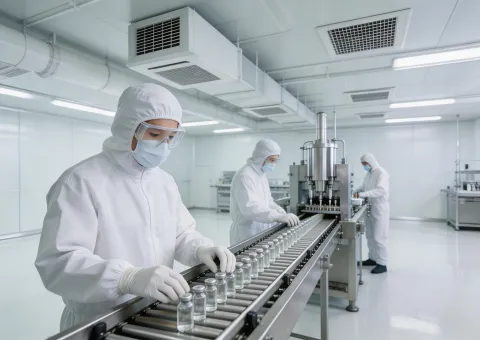
Precision air handling for GMP-classified production environments, research laboratories, and sterile fill-finish lines. Our AHU systems deliver ISO 14644 Class 5-8 cleanroom conditions with HEPA H14 filtration (99.995% retention at MPPS), positive pressure cascade control (15-30 Pa between zones), and temperature stability within ±0.5°C. Air change rates from 20 to 600 ACH depending on cleanliness classification.

Cleanrooms Laboratories Sterile Production API Manufacturing
Discuss Your Requirements
Food processing air treatment

Food & Beverage Processing

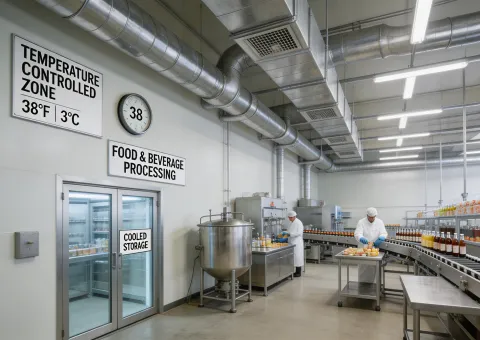
HACCP-compatible dehumidification and ventilation systems for meat processing, dairy, confectionery, bakery, and beverage production. We prevent condensation-related contamination, control ambient moisture for product quality, and maintain temperature zones for regulatory compliance.

Meat Processing Dairy Confectionery Bakery Cold Storage
Discuss Your Requirements
Data center cooling

Data Centers & IT Infrastructure

Precision air handling and free cooling systems for hyperscale and colocation data centers. Economizer-first control strategies maximize free cooling hours — typically 3,000-5,000 hours/year in temperate climates. EC fan technology with variable airflow (VFD-controlled) maintains server inlet temperatures within the ASHRAE TC 9.9 A1 recommended envelope (18-27°C). Integrated evaporative cooling stages extend free cooling range by 5-8°C above dry-bulb economizer limits.

Hyperscale Colocation Edge Sites Telco Facilities
Discuss Your Requirements
Healthcare HVAC

Healthcare & Hospitals

Infection control ventilation for operating theaters, isolation rooms, and patient wards. Our air handling systems provide the required air change rates, HEPA filtration, and pressure differentials mandated by ASHRAE 170 and local healthcare facility standards.

Operating Theaters Isolation Rooms Patient Wards Laboratories
Discuss Your Requirements
Commercial building ventilation

Commercial Buildings & Offices

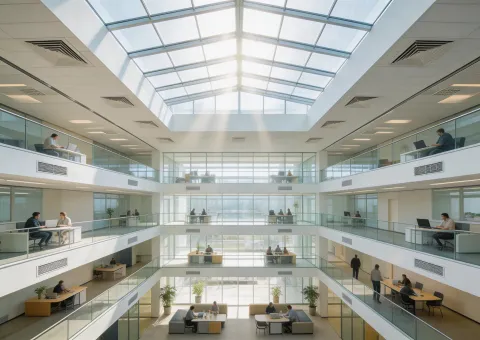
Comfort ventilation and humidity management for offices, hotels, retail centers, and mixed-use developments. Fan coil units and central AHU systems with demand-controlled ventilation balance indoor air quality with energy performance targets per ASHRAE 62.1 and EN 16798.

Office Towers Hotels Retail Museums
Discuss Your Requirements
Industrial process ventilation

Industrial Manufacturing

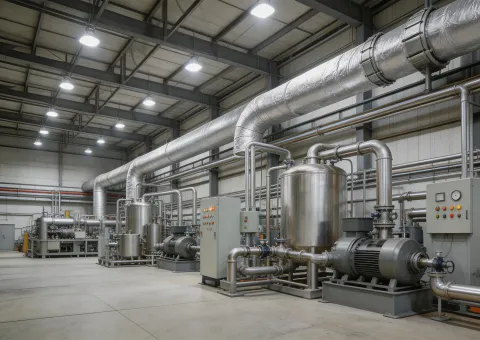
Process air drying, fume extraction, and factory ventilation for automotive paint shops, electronics assembly, printing, textile, and chemical manufacturing. Our systems handle corrosive atmospheres, high-temperature exhaust, and stringent VOC removal requirements.

Automotive Electronics Printing Chemical
Discuss Your Requirements

Air Treatment Selection Considerations

Selecting the right air treatment technology involves trade-offs between performance, cost, and operational constraints. Understanding these factors helps avoid over-engineering or under-specifying your system.

Desiccant vs. Refrigerant Dehumidification

Refrigerant-based dehumidifiers are more energy-efficient above 45% RH target and in moderate climates (operating COP of 2.5-4.0). However, they cannot achieve dew points below approximately 10°C and are subject to coil frosting in cold ambient conditions. Desiccant systems reach dew points as low as -40°C and operate independently of ambient temperature, but consume 30-50% more energy than refrigerant systems at equivalent moisture removal rates above 45% RH. Hybrid configurations combining both technologies are increasingly common in pharmaceutical and food processing applications where both low dew point and energy efficiency are required.

Rotary Heat Recovery vs. Plate Heat Recovery

Rotary heat exchangers (thermal wheels) recover up to 85% of exhaust air thermal energy and transfer both sensible and latent heat. Their limitation is cross-contamination risk: 1-3% of exhaust air can leak into the supply stream through carryover, making them unsuitable for applications with toxic or odorous exhaust (e.g., chemical fume extraction, laboratory exhaust). Plate-type (cross-flow or counter-flow) heat exchangers eliminate cross-contamination entirely but are limited to 60-75% sensible efficiency and require larger physical footprints. The choice depends on exhaust air composition, contamination tolerance, and available mechanical room space.

System Sizing Limitations

Air handling units sized for peak cooling loads operate at partial load 80-90% of the year, reducing efficiency if equipped with fixed-speed fans. Variable frequency drives (VFDs) mitigate this by modulating fan speed to match actual demand, but add 15-25% to the initial motor drive cost. For facilities with stable, predictable loads (such as industrial process ventilation), fixed-speed systems may deliver lower total cost of ownership due to simpler controls and lower maintenance requirements.

Filtration Performance vs. Energy Cost

Higher-grade filtration (HEPA H13/H14) provides superior particulate removal but increases pressure drop by 250-500 Pa compared to fine filters (F7/F9), raising fan energy consumption by 15-30%. Not all applications require HEPA filtration — commercial offices and general industrial ventilation perform well with F7/F9 filters at a fraction of the energy cost. Specifying filtration class should be based on actual air quality requirements (ISO 16890 or EN 1822 testing), not as a default precaution.

Serving Your Industry With Tailored Air Treatment

If your industry is not listed above, contact our application engineering team. We have experience across dozens of specialized sectors and can design a system for your specific air quality demands.

Contact Our Engineering Team